Mangrove Tour and a trip across Alligator Alcatraz
Article by guest author Peter Brooker
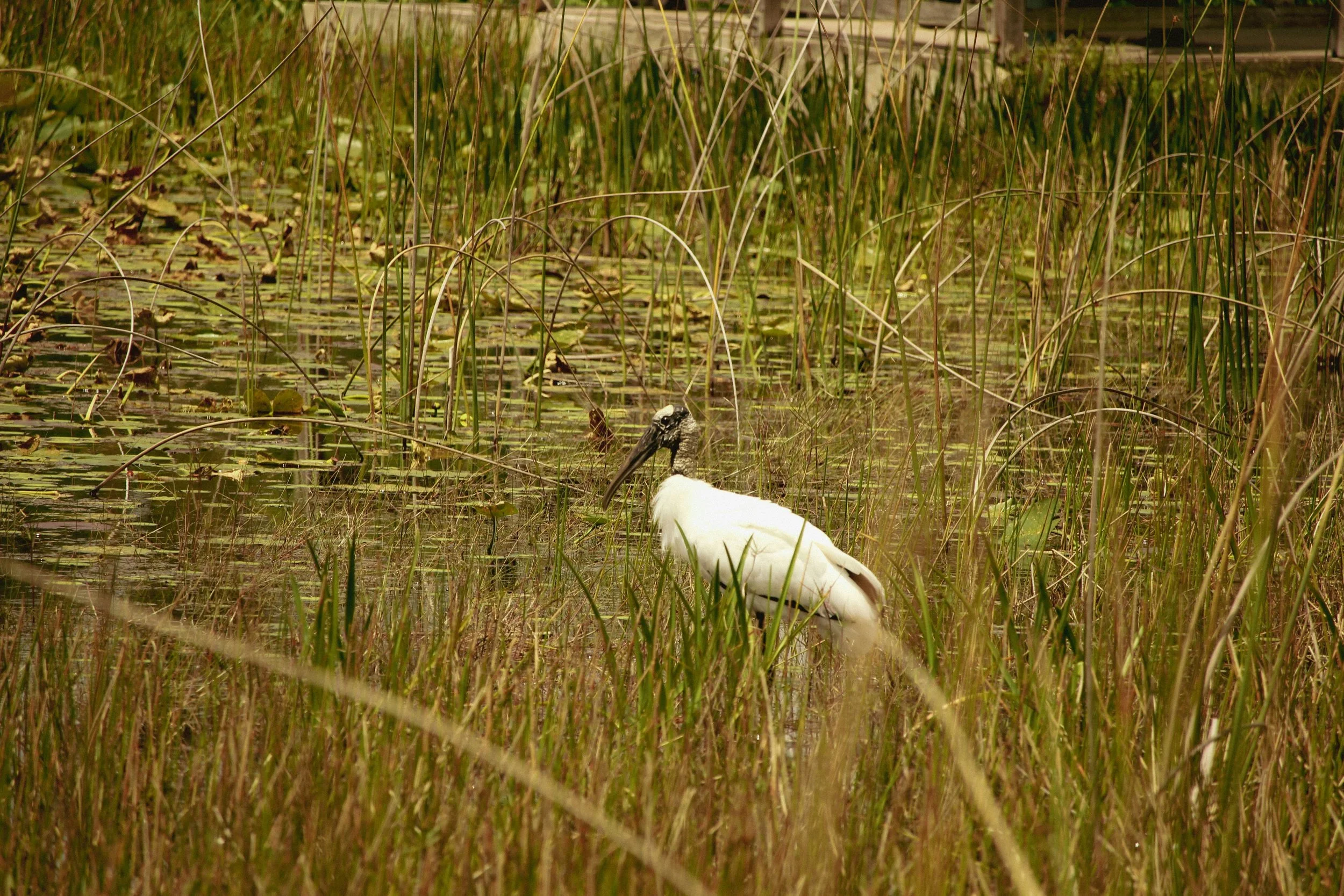
The next day we drove down to Chokoloskee, a small community of 400 or so people and is (I'm told) the last town on the map before you hit the largest undeveloped land in all of Florida.
We booked a tour of the everglades with one of those companies whose homogenous name, the Everglades Florida Adventures Tours, smacks of corporate think-tank durge whose purpose is purely to corner the key words on Google. The wife and I were early and rather than freeze to death outside in the blistering wind, opted to meander aimlessly in the gift shop and listlessly thumb through the cartoon alligator coasters and fridge magnets.
It was then I saw Lyle, a short flatfooted man with a salt and pepper beard, khakis, and a cap that had probably been on his head for every boat ride since he was a child. Crossing the road with the marshes behind him, his eyes combed carefully along the gravel drive, like one does when they lose their keys.
We exchanged pleasantries and followed him by foot along the boardwalk to his boat. 'You lose something back there?" I asked.
'Oh no, I'm just checking for pythons. Someone said they saw a big one along the road last night.'
Lyle had the most southern Floridian accent that you could dream to hear. He would say things like, 'that pelican sure has got a belly-full of fish in him.'
He was quite the outback-entrepreneur. As well as doing boat tours, Lyle made money on the side by hunting Burmese pythons, an invasive species in Florida. Mammals such as white deer, yellow deer are on the decline because of the Burmese python. Although not poisonous, they are constrictors and with no natural predators their numbers are on the ascent.
"You’ll find hoofs in most snakes because it’s one part of the animal they can’t digest." Lyle said. "Trouble is you get those tourists out here that don't know no better. They try and catch them and get photos of them and what not. Burmese pythons are mainly very docile. You can just go up to 'em and pick 'em up. That there is the trouble. One of these out of town folk picked up a Burmese python by its head, next thing you know, that there python coiled up his arms, body and everything. Wrapped him up like you would a half eaten turkey.
One night I was driving. Saw this lady in the middle of the road, hollarin'. I pulled over. She pointed to her husband there in the ditch. He was all coiled up inside this big ass python. He didn't die. But he was big. I never saw one that big before, about 12 feet maybe. I think the record is close to 20 feet for a Burmese. But they ain't protected, no sir. Dolphins protected,
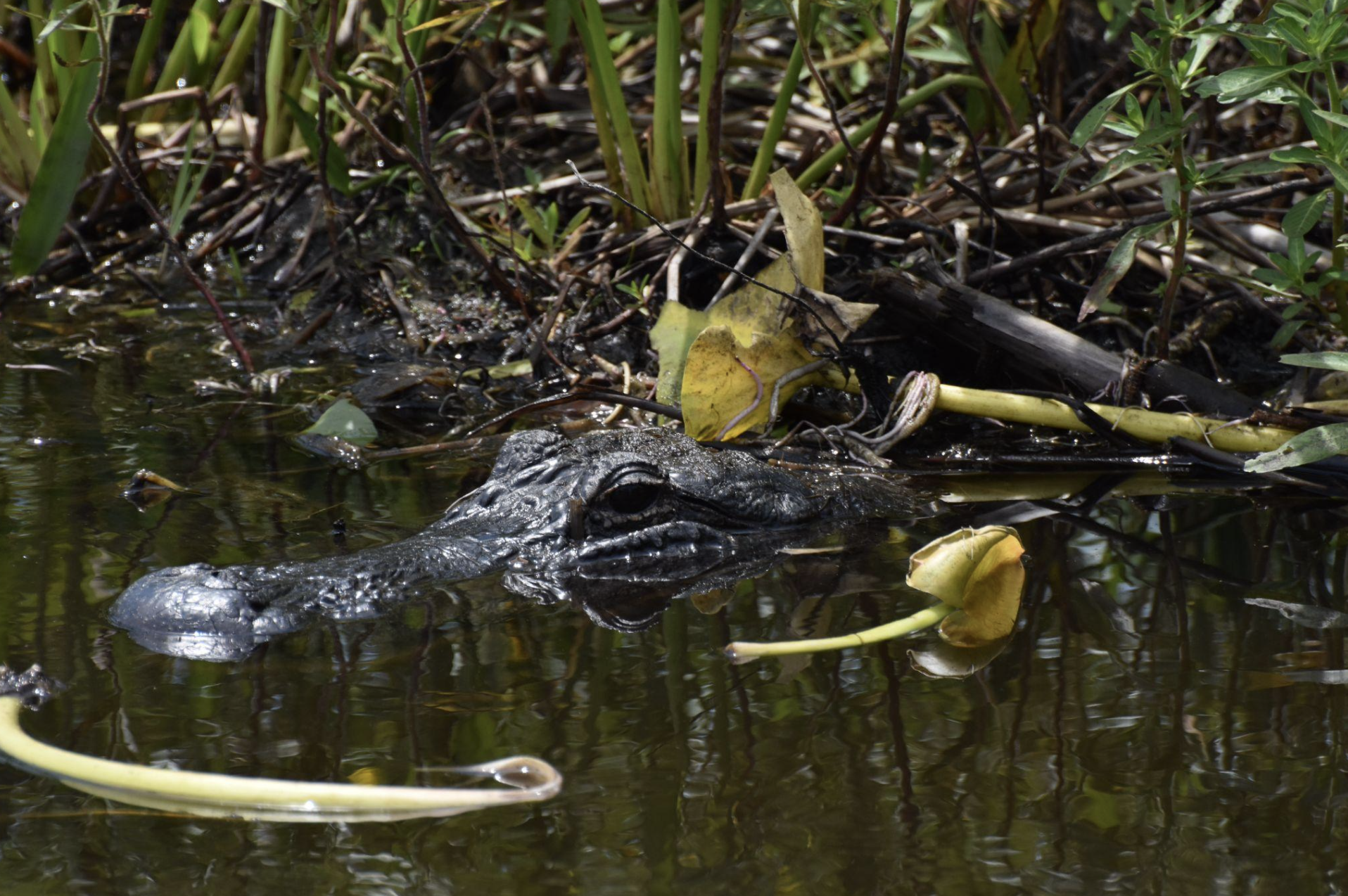
crocodiles protected, gators are protected because folk can mistake them crocodiles. But pythons ain't. You can kill a python, just need to do it in a humane way."
Lyle sneered, as if the very word humane were a swear word. As if it were something invented by bureaucrats who had never stepped foot in an everglade. He later showed me a video on his phone of him feeding a captured python to an alligator on a riverbank. Doubtful this made the criteria humane, but it was fascinating to see nonetheless.
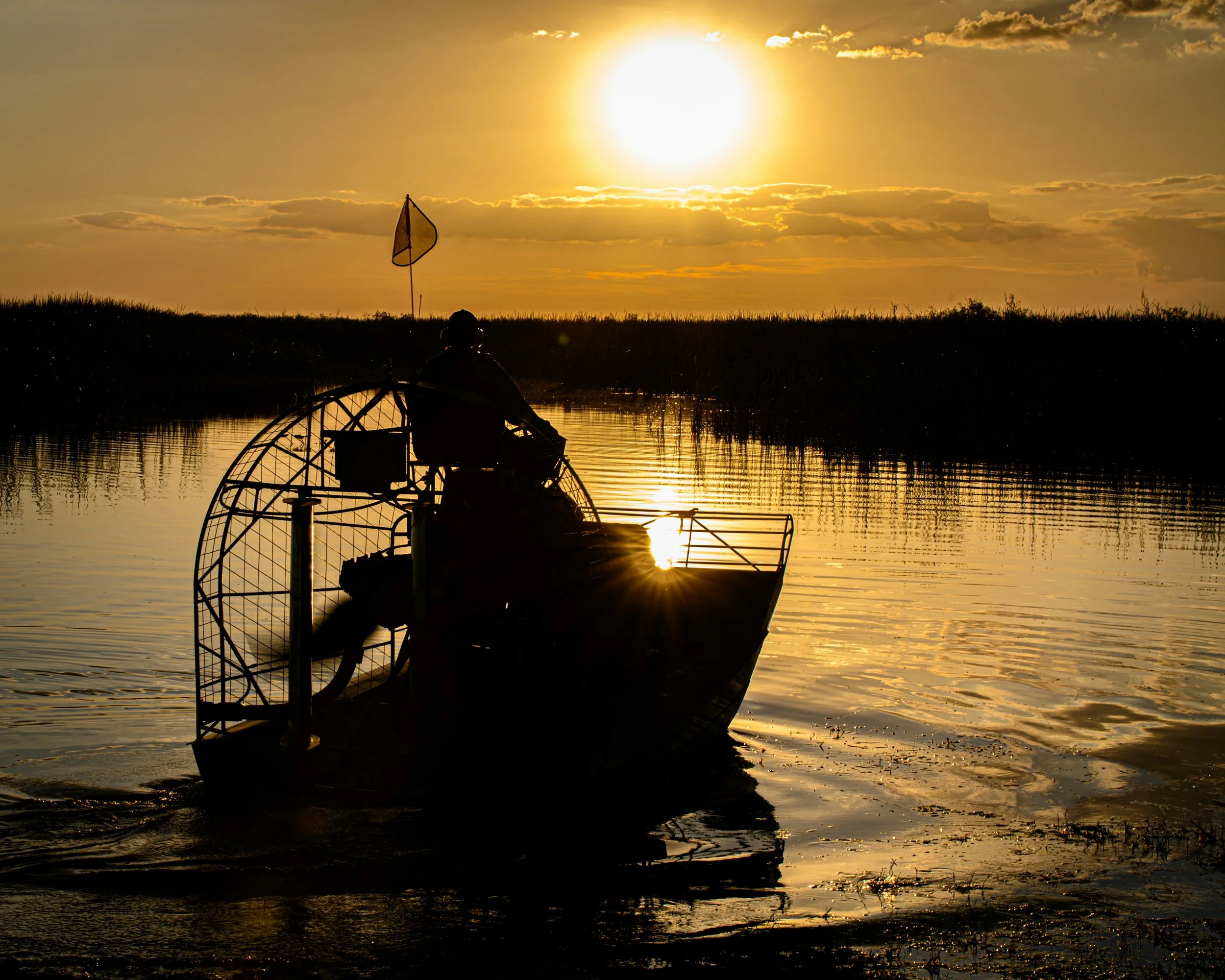
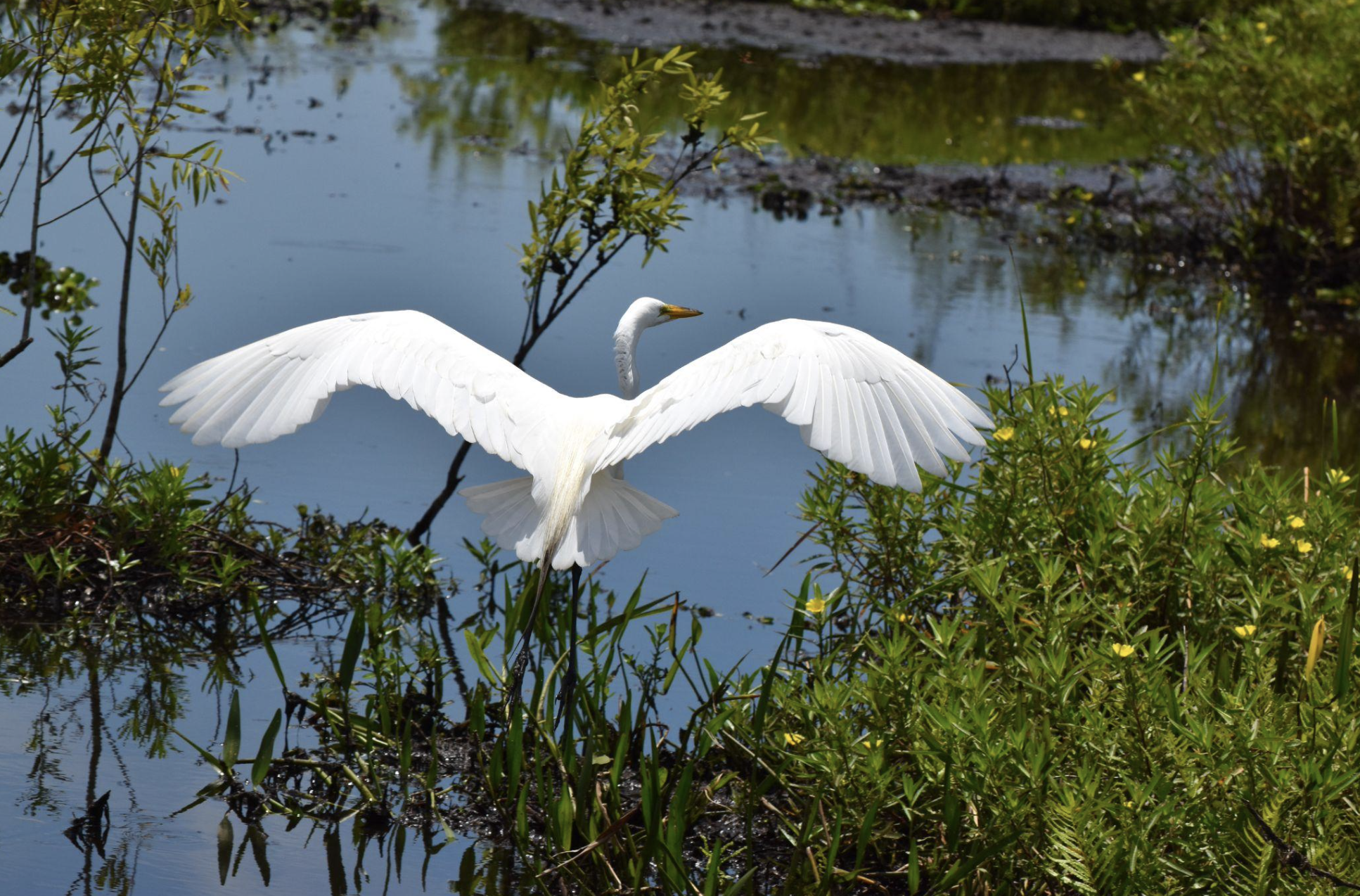
As the boat roared through the bay, pushing out beyond the creek and past the manatee warning signs that housed the Osprey nests, Kyle continued his education on life in Chokoloskee. "In these waters you get Snook and Redfish, them being the tastiest of all the fish. You have three different types of mangrove; the black, the red, and the white; the white look like their roots are dripping into these waters like wax off a candle. The natives call them mangroves, the walking tree or the walking mangrove."
After an hour or so threading the needle along some of the tightest and shallowest patches of mangroves, we emerged into another lake and finally Kyle opened the throttle, and the boat stretched its legs towards a peninsula in the far distance. So cold was the wind that morning it became a thrill ride to endure rather than enjoy. At last we saw some dolphins elegantly half-moon arc in and out of the water. A flock of migratory white pelicans took refuge on a small peninsula that once we got down wind from, a stank of fart-like sulfur. I took this opportunity myself to break wind, knowing my emissions would blend in fantastically.
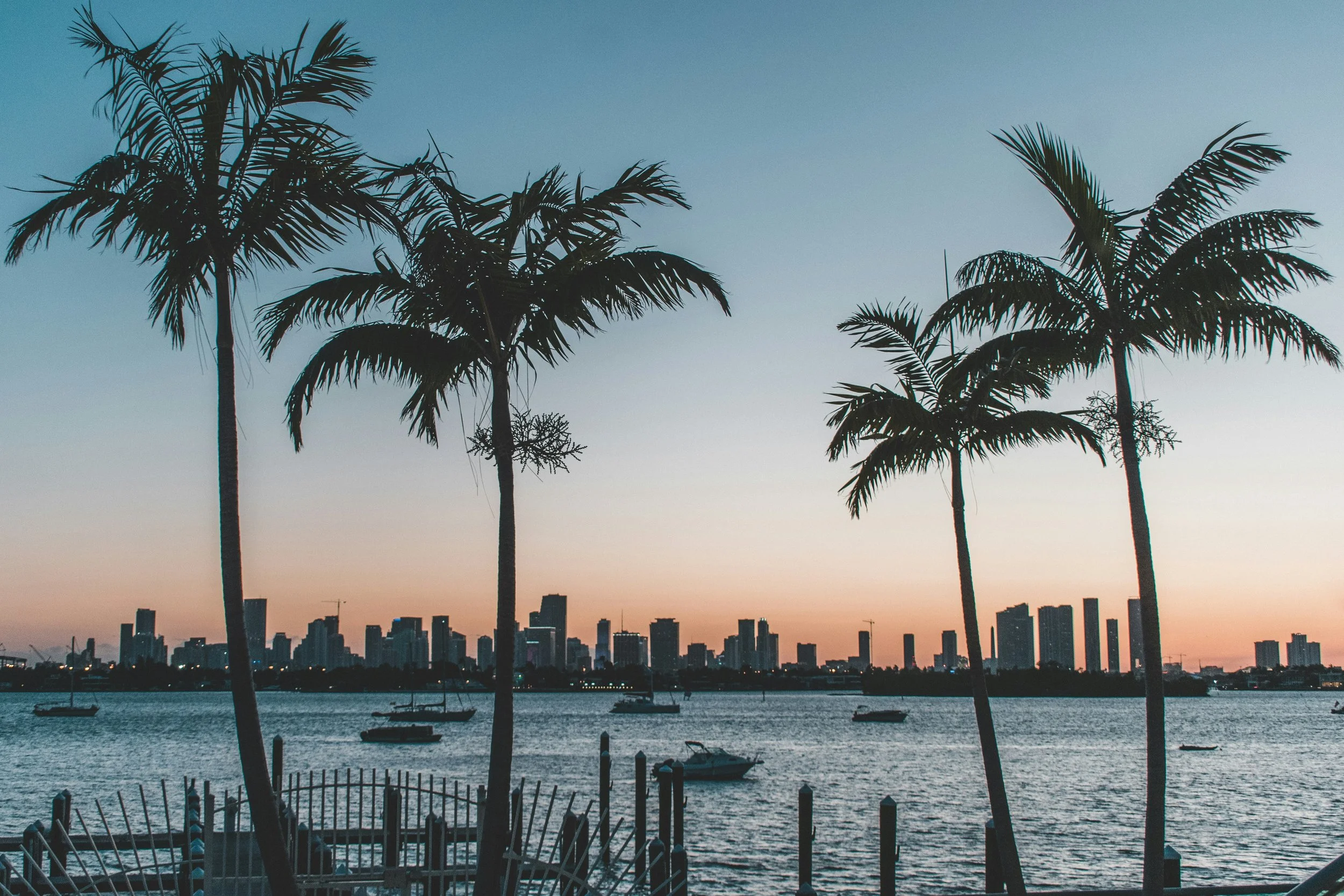
When we came back to dock Kyle shooed away a pelican from the jetty and moored up. "I hate these damn pelicans,' he said. "Especially this one, always here, shitting up my dock." We parted ways and ventured to the southernmost tip of Chokoloskee and had lunch at the Triad café. The Hogfish was good, but the weather was bad, cold and unrelenting. After a couple of hours exposed to the elements, the wife and I craved a couple of hours of heated car seats and a relaxing drive across the state taking the 41 South across acres and acres of evergreen swamps to Miami. Interesting footnote; we passed what used to be a runway that was built in the 70s, but was never completed. They quarried out the remains of the project and turned it into a facility, which then gave birth to a rather Statham film-title-esque detention centre now known as Alligator Alcatraz.
When we passed it there was a small smattering of political protests. We considered getting out for a photograph, but for the risk of sabotaging my Green Card application, (and not wanting to get eaten by alligators) we thought better of it and rode on to Miami.

Founder of this eponymous blog, focusing on men's fashion & lifestyle.