Swakopmund Dune Drive | Day 4 part 2
The Swakopmund strip boasts colonial-era buildings built by the Germans in the late 19th Century. It's cold, and the sea is savage. Our driver for the afternoon is Dawie. A big man with a firm handshake, whose face like most tour guides, has for several decades seen every season of weather without the use of sun protection.
He drove us past the coastal lagoons along Walvis Bay, coloured pink by the salt concentrations. The working Salt Mine just north of Sandwich Bay is the second largest in the world. The salt here is so concentrated that only 5% can be used for human consumption. The rest is sent to Europe for road gritting.
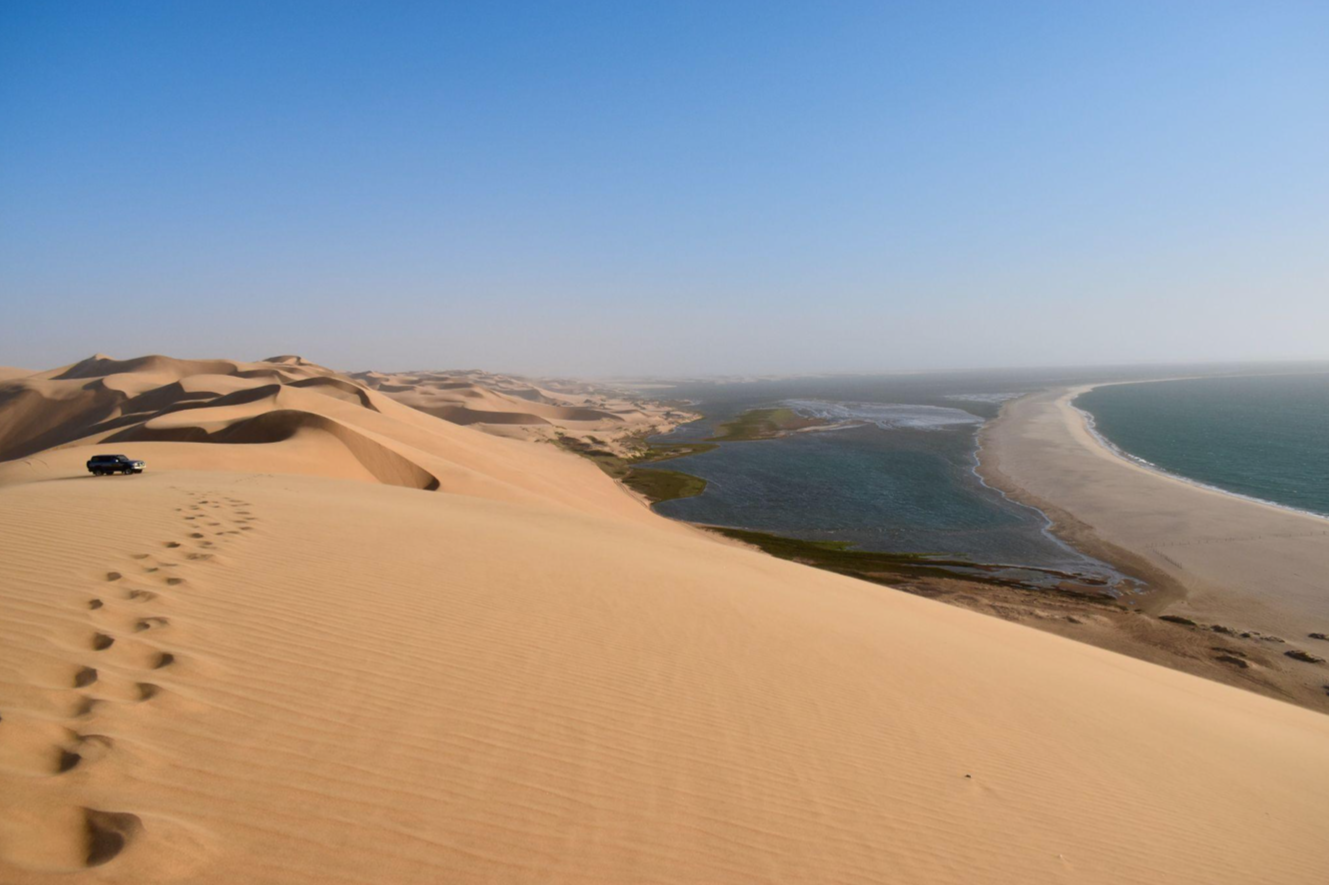
The 4x4 Dune Drive across Sandwich Bay is easily one of the most exhilarating experiences one could have. The beaches are dotted with Cape Seals. Some alive and some dead. Black Backed Jackals patrol the beaches and sleep in a curled heap to shield themselves from the wind. Another couple rip clumps from the carcass of a dead seal. Further along a dead whale rots in the sunset and the tide laps around it.
"What happened here Dawie?" I ask.
"Plastic. The whale has been here a week now, when it first washed up the locals found a bin liner hanging from its mouth."
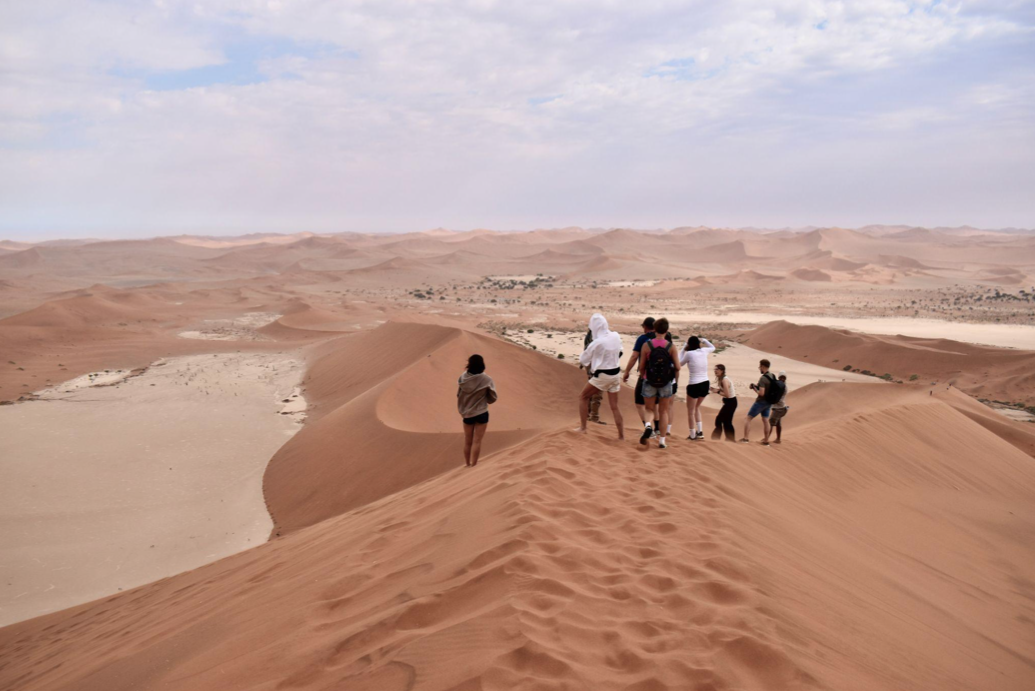
Dawie powered along the coastline, and before long we reached the most northern point where the Namib dunes met the sea. This however was not the end of the adventure. Dawie maneuvered through the gears and climbed the dunes, the 4x4 strained and growled with exertion but ascended every dune Dawie asked without the slightest hint of defeat. Once above the crest of the Dune, Dawie coasted the 4x4 down the other side, the horizon blanketed down over the bonnet, I gripped the door handle and felt my shoulder clench with a vice-like fury.
Having fully descended the dune we once again on the coast line, this time between the Namib dunes and the sea front. Only about two car widths between the tow and Dawie powered north along the beach as the sun came down to our east. More Seals and Black Backed Jackals looked on curiously, but we were completely free from people, and from everything.
Lastly Dawie parked up, despite the wind howling around us we managed to enjoy a sunset drink before heading back.
"You know I'm crazy, yeah?" Dawie said laughing. He told us how he tried to kill a scorpion when he was younger by treading on it barefoot, only to get bit. "I trod on it at the wrong angle, silly really."
The next day we were reunited with a buoyant and refreshed Marius who took us north along the Skeleton Coast. Marius pointed to a heavily guarded satellite facility in the distance.
"The Chinese own it," he said. "No one knows what they do there, not even our own government. If you get too close they send a warning to your phone. The Chinese are taking over Namibia. The fishing industry, the mining industry, soon they'll take over the tourism industry and nothing, no money I mean, will trickle down to the Namibian people. There is no fleet that controls the borders of the ocean here. A lot of unwanted boats come in illegally. They come and fish and most of these are Chinese boats. The Chinese don’t plan for tomorrow, they plan for 100 years. They have the manpower and money. They work like horses."
Marius talked about the Chinese objectively, as if it had no effect on him personally. But in the same breath, like a virus he respected. One that could not be stopped. The Chinese were taking over Namibians wealth and minerals, the government are corrupt and complicit enough to let it
happen in exchange for new highways, new infrastructure and no doubt great personal wealth to those in charge.
A short drive along the coastal wilderness that the Portuguese used to refer to as the "Sand of Hell' referring to the fact that if one did survive a ship running aground, the harsh desert would almost certainly provide one's final resting place. Marius parked up and told us not to talk to the hawkers or buy anything from them. He had little sympathy for the natives and found them an increasing irritant.
I took a few snaps of The Zeila, now a nice haven and breeding ground for the Cape Cormorants. The day was overcast, and the Zeila felt as cold and as dramatic to look at as the sea and clouds itself. Some short information on the Zeila can be found below, the original author has detailed this and many other shipwrecks across the coast on this website here.
The Zeila stranded on 25 August 2008 in the early morning hours near "Die Walle", a popular fishing spot about 14km south of Henties Bay.
The fishing trawler that was sold as scrap metal to an Indian company by Hangana Fishing of Walvis Bay got stranded after it came loose from its towing line while on its way to Bombay, India shortly after it left Walvis Bay.
From the Sand of Hell to Twyfelffontein, our journey turned inland towards Damaraland.

Founder of this eponymous blog, focusing on men's fashion & lifestyle.