The Story of Road Kill in Etosha
Article by guest author Peter Brooker
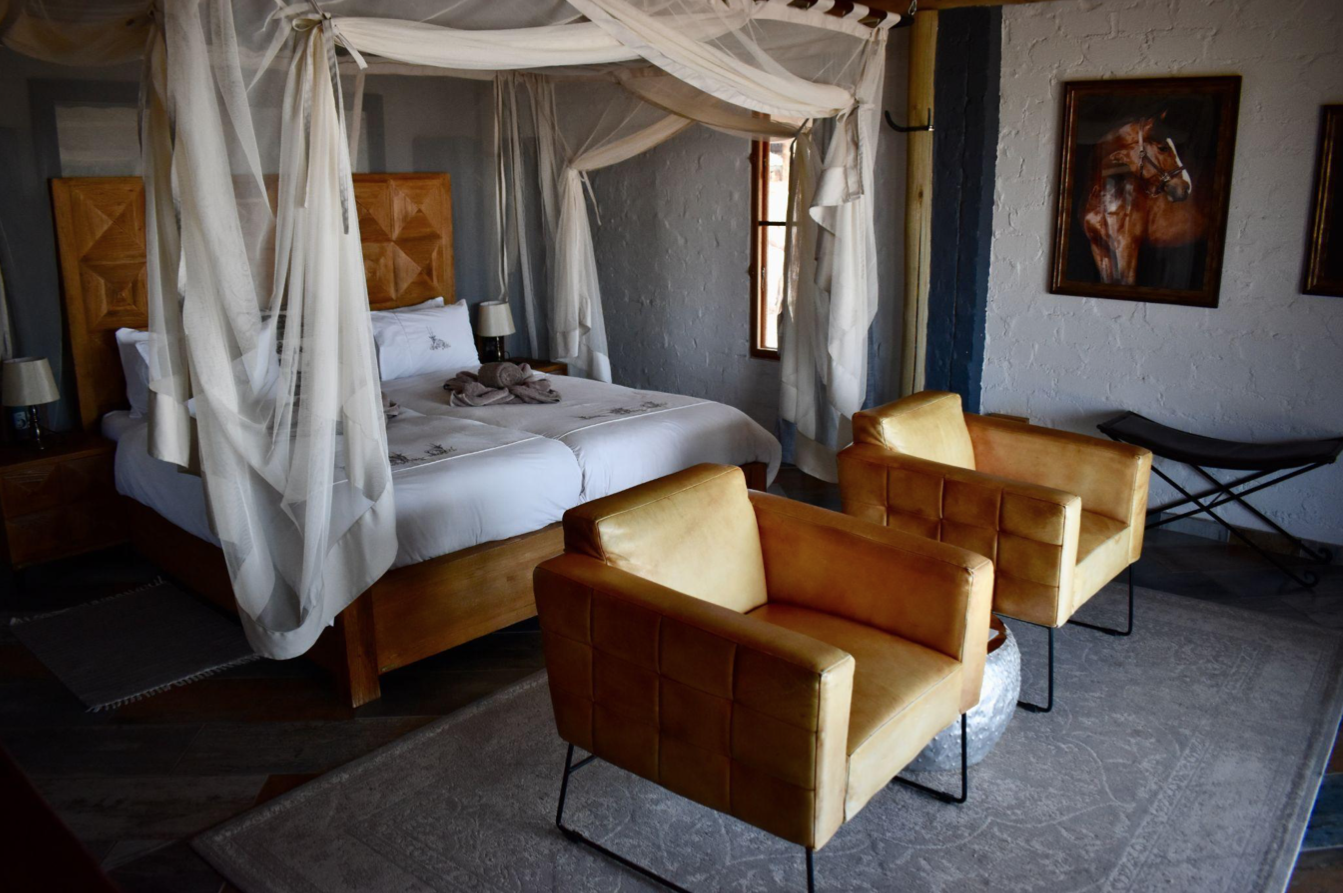
The last stop of the tour was the Emanya@Etosha Game Lodge. We were to enjoy one last day in Etosha, and that came with the usual routine of self drivers holding up the customs and inspection officers at the entrance. Marius grunts and shuffles in his seat and groans a tiresome, experienced groan.
You don't see as many birds here as you would along the Okavango Delta. We did manage to see the Red-creasted Korhaan, aka the Suicide Bird. The bird earns his name through its unique mating rituals. The male flies high into the air, folds its wings, and plummets back to the ground in a somersaulting motion, only to open its wings just before landing to ensure a soft arrival. This "suicide" dive is a method to attract females, who choose the male who can get closest to the ground without injury. Not every male survives this stunt.
Flamingos will fly 340km to Etosha from Walvis Bay to mate, but only when there is enough water in the pan. If there is not enough water they will not mate and they will fly back.
‘How do they know when to come, when the water is high enough?’ The wife asks.
"Very good question," Marius says. "I’ve heard so many theories that I could write a book. My favourite is they send a couple of scouts to do some reconnaissance. A one way trip takes 3 days."
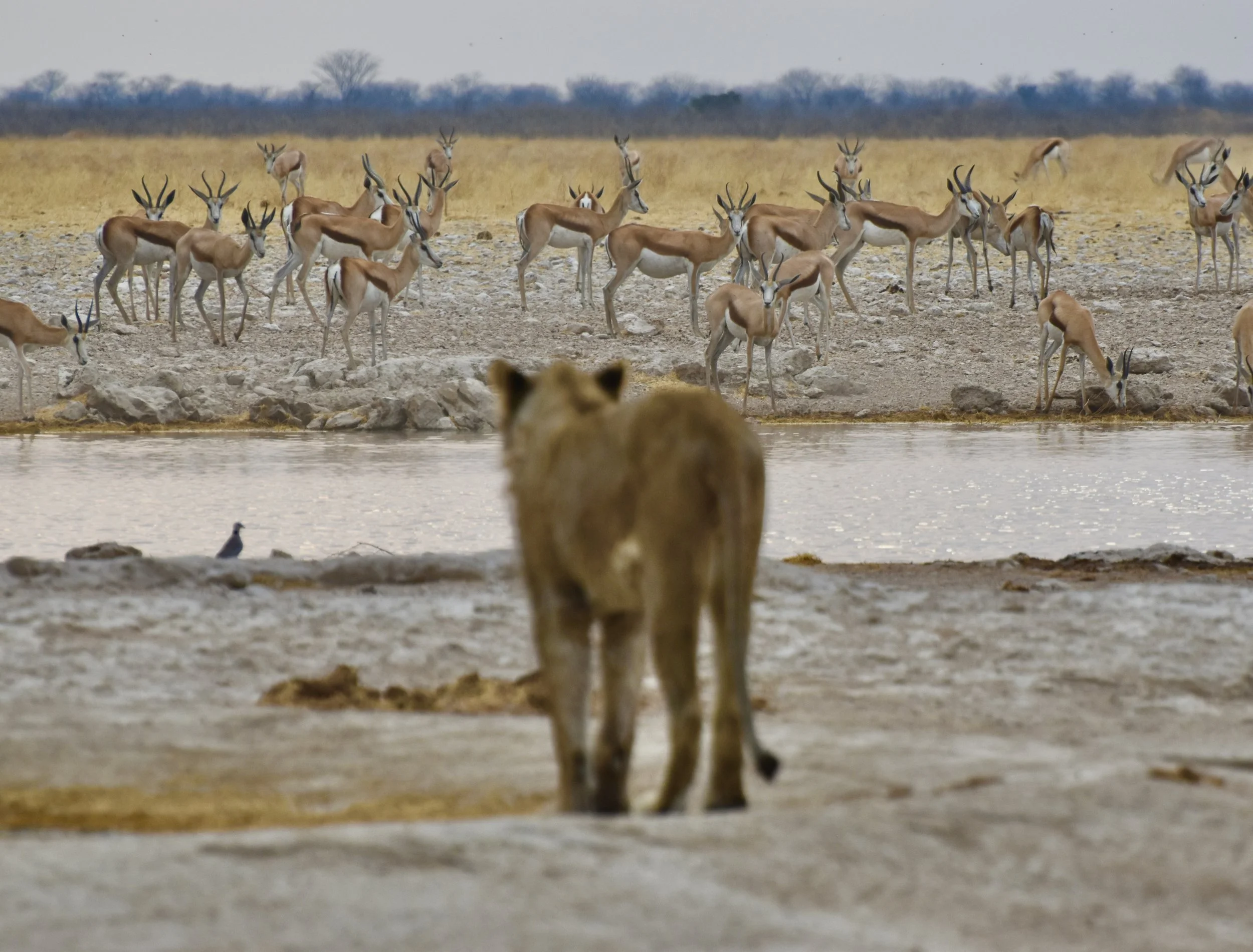
The speed limit inside the park is 60mph. And the regulation is in place to minimise the amount of potential death of animals by road kill. Leaving one watering hole, a zebra and an impala shot across the defender in quick succession causing Marius to break and Anastasia to shriek momentarily. Two very near misses.
Should a safari guide hit an animal inside the park it needs to be reported. The guide must then inform the park rangers of the incidents who then duly come out to measure the tracks of the car to deduce the speed the vehicle was going before impact. If the driver is to be considered over the limit, he will be chucked out of the park.
Marius spoke about a springbok he found that had been hit by a car.
‘All its legs were broken. It must have been on the side of the road in that condition for some hours already. I had a family in the car. I told them to look out the other side and I got out of the car with my knife, and cut its throat. There were hyenas around, and hyenas don’t kill their prey like lions, or leopards do. They eat it alive. I couldn’t leave it there like that.’
It was in moments like these you could see the size of Marius' heart. And how connected he was to nature. He was in his own way, a true hunter gatherer. He told me how he made his own moonshine during the government alcohol curfew through COVID. Marius also produces his
own BBQ grills and his mini-empire has gotten so big, he has delegated production to his father as a project for him to do during his retirement. Sadly, with the rate of his smoking, which in no doubt is a cause of his scratchy cough, I fear Marius himself won't be around to see his own retirement years. I hope this is not the case, and if by chance he gets to read this, thank you Marius for such a breathtaking adventure through your heartland.
We all checked into the last lodge and ate one final meal together. Marius continued to inform us of the local delicacies and confirmed my belief that springbok does indeed make for the best biltong.
"Springbok, yes. When the right dried amount of springbok is served with natural farm butter," Marius trailed off and unlocked a groan of sumptuous delight from his treasure chest of sensory pleasures.

Founder of this eponymous blog, focusing on men's fashion & lifestyle.