The Daily Fight: Mental Health, Positivity and the Battles We Choose to Lose
Article by Peter Brooker
I've come to realise something in my late forties that perhaps I should have understood twenty years ago: every day is a fight. Not necessarily a dramatic battle against some great adversity, but a series of small, often invisible struggles against our own instincts, habits and excuses.
From the moment you wake up, there are decisions to be made. The first is often the simplest: do you get out of bed, or do you pull the covers over your head and put off facing the day for another ten minutes?
Most mornings, staying in bed feels like the more attractive option. Especially when the room is cold, the weather is miserable or you have a job to do that you would rather avoid. Getting up requires a little effort, a little discipline and, sometimes, a conversation with yourself about why you should bother at all.
But how often do we stop and consider what we actually have to get up for?
How many mornings do you leap out of bed, punch the air and think, Thank God I'm alive. My wife is alive and well, my family are safe, and my pets are here with me? How often do you genuinely appreciate those things before the day begins?
Probably not often enough.
Instead, the temptation is to reach for the phone. Before the kettle has boiled, we're checking whether someone has liked yesterday's post, whether a message has arrived or whether the online world has noticed our existence. We seek validation from complete strangers while overlooking the things that should give us a far greater sense of security and happiness.
Perhaps the first fight of the day is not getting out of bed at all. Perhaps it's resisting the urge to measure our worth by the attention we receive from other people.
Imagine making that coffee, sitting down and actually enjoying it. Appreciating the quiet knowledge that your wife is in the next room getting ready for her day, that she loves you and that your relationship is built on trust. Remembering that you can pick up the phone and tell your mum you love her.
These are not extraordinary privileges. They are ordinary blessings, and perhaps that is precisely why we overlook them.
The battle for our attention
Once the day gets going, another fight begins: the battle between what we should be doing and what we'd rather be doing.
You sit down at your desk, knowing there is work to be done. Instead, you decide to prepare for your podcast, even though it doesn't make any money. You start writing a blog post that might be read by ten sympathetic friends. You find yourself doing almost anything except the work you've actually been commissioned to do.
There are always distractions that feel productive. We can convince ourselves that we're busy, creative and working towards something worthwhile, even when we're avoiding the one task that really needs our attention.
Before long, we're checking insurance quotes, looking for gardeners or sorting out some other domestic problem. All perfectly reasonable things to do, just not necessarily at that particular moment.
The difficulty is that the easier option often wins because it offers an immediate reward. The harder option asks us to tolerate a little discomfort now in exchange for a benefit that might not arrive until later.
And this is where the daily fight becomes interesting. It's not always about working harder. It's about learning to recognise when we're avoiding something, understanding why we're avoiding it and finding the resolve to begin anyway.
Of course, there is a balance to be struck. Not every hobby needs to become a business, and not every spare minute needs to be productive. Sometimes writing that blog post or recording that podcast is precisely what makes life enjoyable. The question is whether we're choosing those activities because they matter to us or using them to escape the things that matter just as much.
The fight with ourselves
Then comes exercise.
Who really wants to go running in the rain? Who looks forward to getting out of a warm house to run around a cold park when the sofa is right there, waiting?
Even when we do turn up, there is another negotiation. Twenty minutes of running instead of thirty. Three sets on the bench instead of five. A little less effort because nobody is watching and nobody would know the difference.
We make these compromises so frequently that they begin to feel normal.
Yet exercise is one of those things that can pay us back in ways that go far beyond appearances. It can improve our mood, help us manage stress, support our physical health and
give us a sense of achievement. It is an investment in the person we are today and, just as importantly, the person we will be in twenty years.
There is a caveat, of course. The goal is not to punish ourselves or push through injuries to prove how tough we are. Rest is necessary, and our bodies change as we get older. The real challenge is consistency: finding a way to keep moving that is sustainable, enjoyable enough to repeat and appropriate for the body we have.
We cannot control every aspect of our health, but we can often influence some of it through the choices we make.
And then there's food.
The homemade pie looks delicious. The granola is sitting in the cupboard. There's a packet of crisps within easy reach, and the business lounge has laid out a complimentary buffet that seems determined to test your resolve. At a wedding, the free food is almost impossible to resist.
One indulgence doesn't matter very much. Neither does enjoying a slice of cake or eating something simply because it tastes wonderful. Life would be pretty miserable if every pleasure came with a lecture about self-control.
The problem is what happens when small decisions become daily habits, and those habits continue long after we stop noticing them.
At some point in our late forties, we might find ourselves looking down at our stomach, noticing that it is spilling over our belt. We undo the top button of our trousers and loosen the zip just to feel comfortable.
And perhaps that is the moment we recognise that, somewhere along the way, we've lost a few battles.
The uncomfortable question is whether we have lost a few or whether we've stopped trying altogether.
The things we quietly abandon
But the fight isn't always about work, exercise or food. Sometimes it is about the person we once imagined becoming.
Think about the languages you wanted to learn. Perhaps you have friends from all over the world, and you promised yourself that one day you'd be able to speak to them in their own language. You bought a book, downloaded an app or completed a few lessons.
Then life got busy.
A week became a month, a month became a year, and eventually the idea of learning that language became something you talked about rather than something you did.
Or consider the guitar sitting in the corner of the room. You haven't picked it up in a year, yet you can't quite bring yourself to sell it. Perhaps it represents a version of yourself that you still hope to rediscover: the person who was going to learn to play, who imagined sitting around with friends and entertaining everyone with a few songs.
These abandoned ambitions can be surprisingly difficult to let go of. They remind us of the things we wanted to do but never quite managed to make time for.
And that raises a bigger question. Are we genuinely too busy, or have we gradually surrendered to the easier option?
The answer, I suspect, is a mixture of both.
Modern life places enormous demands on our attention. Work, family, finances and the endless stream of information coming through our phones can leave us feeling as though there are never enough hours in the day. Sometimes we really are exhausted. Sometimes our responsibilities leave little room for anything else.
But sometimes we use the lack of time as a convenient explanation for a lack of intention.
There is a difference between not having time to learn a language and never giving it fifteen minutes. There is a difference between being too busy to exercise and finding that the television always gets an hour of our evening. And there is a difference between deciding that an old ambition no longer matters and simply allowing it to disappear through neglect.
Recognising that difference is not an invitation to beat ourselves up. It is an opportunity to take an honest look at how we spend our lives.
Positivity is not about winning every battle
There is a danger in thinking about life as a constant fight. If we're not careful, the idea of self-improvement can become another source of pressure, leaving us feeling guilty whenever we rest, indulge ourselves or fail to meet our own expectations.
Mental health is not a competition in which the most disciplined person wins. We all have days when getting out of bed feels harder than it should. We all experience periods when motivation disappears, when our priorities change or when simply getting through the day is enough.
Sometimes what we need is discipline. Sometimes what we need is kindness towards ourselves. And sometimes we need to acknowledge that we're struggling and ask somebody for help.
There is no virtue in pretending that everything is fine when it isn't.
Perhaps positivity is less about waking up every morning feeling grateful and enthusiastic, and more about learning to recognise the good things that remain even when life is difficult. It is about appreciating the people who love us, looking after ourselves where we can, and understanding that one bad day does not have to become a bad week, a bad month or a bad year.
It is also about accepting that we cannot win every battle. We will make mistakes, miss opportunities and occasionally fall back into old habits. The important thing is not to turn a temporary setback into a permanent verdict on who we are.
If you missed a run yesterday, you can go tomorrow. If you've neglected the guitar for a year, you can pick it up tonight. If you've spent too much time looking for approval online, you can put the phone down and pay attention to the people sitting beside you.
You do not have to transform your entire life in one dramatic gesture. Sometimes the most meaningful change begins with one small decision made differently.
So, are we time-poor, or are we giving up?
Perhaps this is the question that has been troubling me as I approach fifty.
How much of our lives is genuinely determined by circumstances, and how much is shaped by the choices we make when nobody is looking?
We cannot control everything. We cannot guarantee good health, financial security or happiness. We cannot always choose how much time we have, what responsibilities fall upon us or what difficulties we will face.
But within those limitations, there is often some room to manoeuvre.
We can choose to spend a little less time scrolling and a little more time talking to someone we love. We can tackle the difficult job before distracting ourselves with the easy one. We can take a walk, cook a decent meal, learn a few words of another language or pick up that guitar.
We can also decide that something we once wanted is no longer important. That is not necessarily giving up. Sometimes it is simply growing older, becoming wiser and recognising that we cannot do everything.
The trick is to know the difference between a dream we have genuinely outgrown and one we have abandoned because it became inconvenient.
I don't think the answer is to spend every waking hour fighting ourselves. Life should contain pleasure, spontaneity, rest and the occasional slice of homemade pie without guilt. Nor should we spend our later years obsessing over every missed opportunity.
Instead, perhaps we should become a little more conscious of the battles we choose.
Every day presents us with small opportunities to look after ourselves, appreciate the people around us and move a little closer to the life we want. We won't always take them. We don't have to.
But we should at least be aware that the choices are there.
Because one day, we may look back and realise that the years didn't disappear all at once. They went in small increments: another morning spent scrolling, another promise postponed, another ambition left gathering dust.
And perhaps the greatest fight of all is not against laziness, ageing or a changing waistline. It is against the quiet assumption that there will always be more time.
So, here's to getting out of bed, making that coffee, doing the work, looking after our bodies, appreciating our families and occasionally picking up the guitar.
Not because we have to win every battle, but because the life we're living is worth showing up for.
We may not be able to control every day, but we can make a conscious choice about how we meet it. And sometimes, that is a very good place to start.
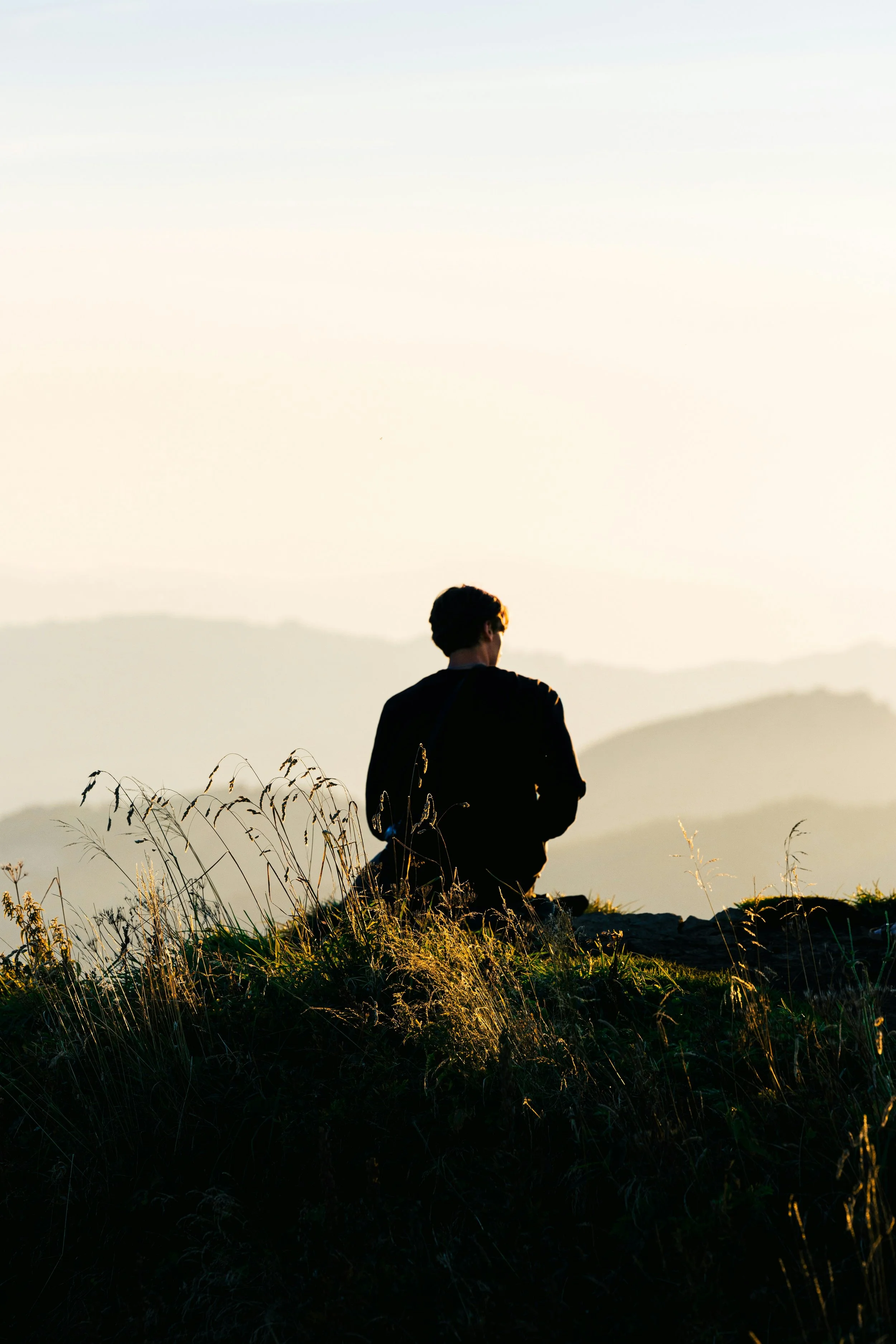
Photo by Thierry Lemaitre on Unsplash

Founder of this eponymous blog, focusing on men's fashion & lifestyle.