LEARN ABOUT CHAMPAGNE: IN THE WORDS OF A TOUR GUIDE
Article by guest author Peter Brooker
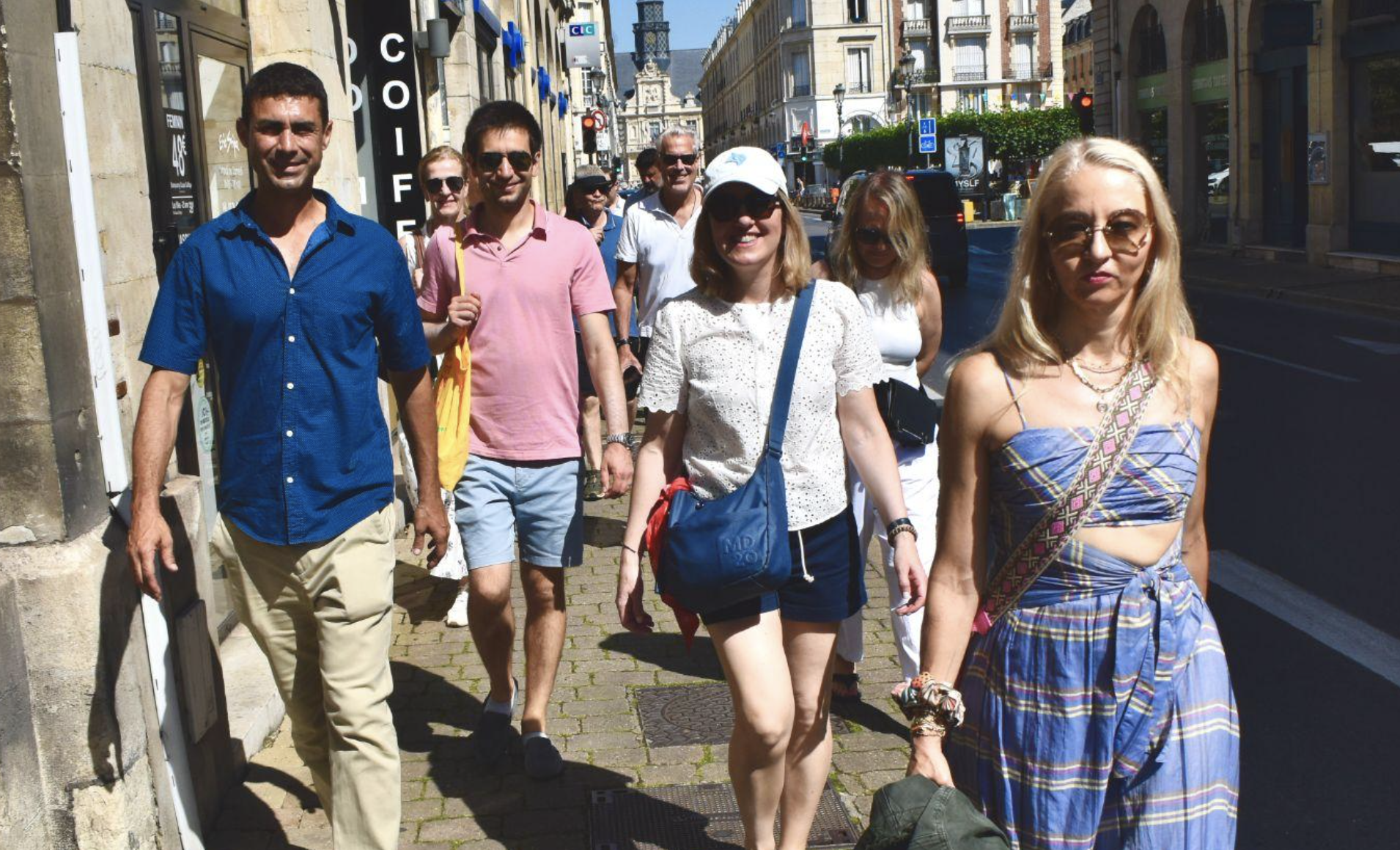
Who better to talk about the misconceptions of Champagne whilst learning about the history of Reims, than a Reims tour guide with a Masters in wine, Thomas Briollet. I had the pleasure of going on one of Thomas' tours and you can make your enquiries here.
Thomas please introduce yourself and what got you into taking a Masters in Wine?
Born and raised in Champagne in the early 80's, I spent the first few years of my life in le Massif de Saint Thierry in a village of the appellation, then we moved to Reims. My family did not have any special connection with the world of wine, but vineyards were around and the coop winery was between the school and my home so Champagne was already in the background.
I started to work in the wine industry in Oenotourism as a sommelier for Mercier then Pommery following a Bachelor degree and a work experience in banking. Somehow English connected me to the world of wine.
During my time at Pommery estate, interaction with the Chef de cave Mr. Gasco, led me to decide to study again. I went to Alsace to learn about wine beyond sparkling. I obtained a Licence Professionnelle Vins et Commerce (Master 1 in Wine and trade). The internship led me to Beijing China, where I then joined a wine Importing company to open the Branch in Beijing.
I will spend the next 15 years of my life in Asia (10 years in China, 5 in Cambodia), mostly working as Branch Manager for wine importing companies (with extensive wine selection from nations from all over the world), with a strong emphasis on hospitality. I also worked 3 Years as Export Manager and Brand Ambassador for wineries in greater China.
This experience allowed me to expand my knowledge about wine, especially outside of France, about different wine consumers and pairing wines with new cuisines. I came back to France in 2020, due to personal reasons. I worked a few years for a Champagne House as the sales manager on the French Market and since 2025 I decided to connect again with the end consumers in a more international way, welcoming guests touring in my home region.
What is the most common question you get asked regarding Champagne?
I think here there are 3 main questions which frequently will be asked: Can Champagne be made somewhere else? Champagne must be coming from vineyards within the area of the appellation which is in Champagne
Why is Champagne never Cheap? This comes from the specific organisation of the region where the price and the crop is negotiated between the Farmers and the Houses, which allow the crop to be well valued, nowadays the cost of the grapes to make one bottle of Champagne can be above 10 Euros, then you need to add all the other costs (dry goods, workers, equipments, electricity and fuel, time of the aging of the wine, taxes...)
How do we make the wine sparkling? Thanks to the insemination of a still wine with yeast and sugar at the moment of the bottling, this will trigger a second alcoholic fermentation in the sealed bottle, the dioxide gas released will turn the wine from still to sparkling.
Would you say there is as much of a difference between the different brands of Champagne, in terms of taste, as there is with red wines?
There is a lot of diversity in Champagne, coming from both the origin of the grapes used for the wines but as well due to the winemaking and the aging of the still wine and then the time of
aging in the bottle following le Tirage. You will also have different dosages (blend of wine and sugar added after the removal of the lees inside the bottle) possible.
We also can blend year and varietals or go single year single block single varietal. Our terroirs also have their own specificity and are quite different from a village to another,
So Champagne is as diverse as a red wine region could be, but we are not as diverse as the world of red wines in general, as there are so many diverse terroirs available worldwide allowing you to make different wines. Our wines will always only be an expression of our specific terroirs.
What should one be looking for when it comes to determining the quality of Champagne?
Trust yourself, I think we all can feel and our palate will evolve while we sharpen it. At first you can be tricked by "made up" but quickly you will avoid them. Thin bubbles are a marker of patience which yields great results in the world of champagne. It has to be pleasant and balance, with intensity
Then upon your taste you will prefer a fresher or more complex version of the wine, the moment and the food on your plate too will also have an impact on the wine you will go with.
Do you have a favourite Champagne house? And if so why?
As a wine lover there are way too many producers I really like here but for the houses there are 3 I do have a special thing for. Charles Heidsieck, one of my good friend's mothers used to work for them and since my late teen years I have had the opportunity to taste their wines. The level of complexity and consistency on their non vintage brut is brilliant, I always enjoy it.
Drappier. We imported them in China, and I had the pleasure to meet Michel Drappier several times. A family owned house, on la côte des bars, working on organic vineyards with majority of their supply of grapes coming from it. Their wines are made today by the son Hugo who brings his vision while carrying on the house's legacy.
Billecart-Salmon; another family owned house which we were importing in Cambodia. First thing first, the wines are excellent, I keep a fond memory of Nicolas Francois 2002. They are really gastronomy oriented, so pairing their wines at your table is always a great moment. Mathieu Roland Billecart is at the helm of the house.
I noticed that when I was drinking good Champagne, I was not waking up with hangovers. Do you find similar effects? And why is that?
Wine is a natural product, but wine is also ruled by chemistry. So like any food product is the product tainted or not. Somehow the not well made wine you are adding a lot of things in, the better wines not. So I believe it may have an impact, as I also seldom feel negative effects when the wine is of a great quality.
Lastly, as you may have picked up I'm a huge James Bond fan, in the novel Casino Royale the sommelier directs Bond to try the Taittinger Blanc de Blancs Brut 1943, declaring it without equal. Would you agree with this statement?
1943 is regarded as one of the great vintages of the 20th century, on par with the likes of 1982. Very good recommendation from the sommelier even though 1945 was a much better vintage for freedom in Europe.

Founder of this eponymous blog, focusing on men's fashion & lifestyle.